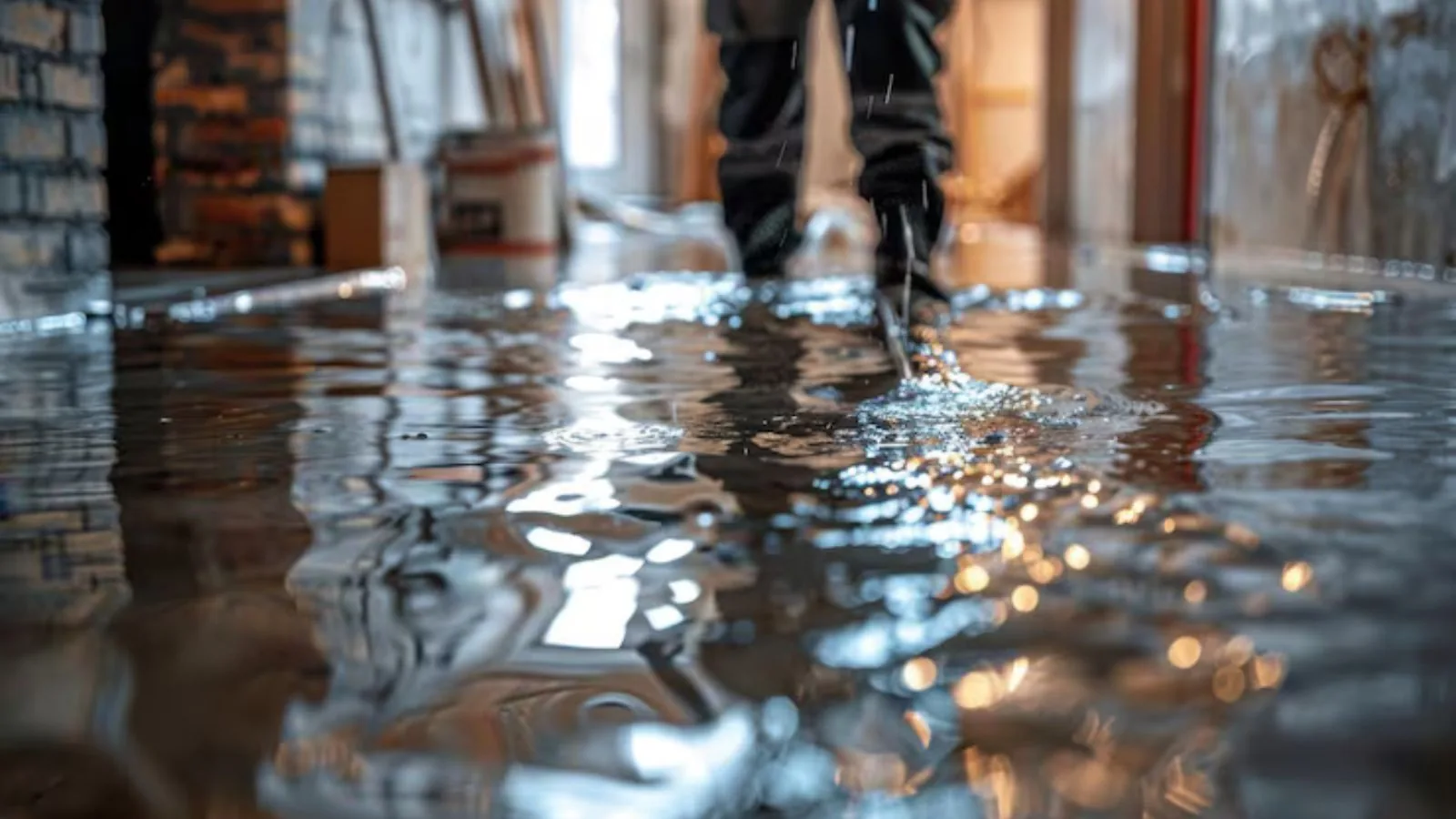
Standing water in a Salisbury house is an emergency, and our line is open 24/7 right now. While you wait for a crew, stop the source if it is safe, close the main water valve, lift furniture and valuables off wet floors and keep electrical devices out of it. If water is near an outlet or the panel, stay out of the room and call the utility or 911 before you call us.
Water extraction is the first stage of water damage restoration in Salisbury, NC. It means pulling standing water out of a building with pumps and extraction units before it soaks into subfloors, insulation and wall cavities. Extraction is not drying, because it only removes the water you can see so the drying equipment can deal with the moisture left inside the materials.
When standing water is an emergency
A mop bucket of water is a cleanup. Water that is still coming in, covers carpet or pad, reaches a wall, or spreads past one room is an emergency, because every hour it sits it moves further into materials that were dry this morning.
Pipes rarely fail at a convenient time. After-hours and weekend calls reach the same line, and we work to respond the same day whenever a crew is free. We will not invent an arrival time, but we will tell you honestly what to do in the meantime and what we expect to find.
How water extraction works, step by step
Classify the water
The first question is where the water came from. Clean supply water is handled differently from creek water or anything that came out of a drain, and that category sets the safety rules for the whole job.
Pump the deep water
Submersible pumps move water that is more than a couple of inches deep out of basements, garages and crawl spaces, usually through hoses run to the outside or a floor drain.
Extract from surfaces
Truck-mounted or portable extraction units and wet vacuums pull water out of carpet, pad, tile and hardwood so less of it migrates into the subfloor.
Remove what cannot be saved
Soaked carpet pad, wet insulation and baseboard that traps water are removed so air can reach the cavity. Then the drying stage begins.
Extraction compared with the stages around it
| Stage | What it does | Typical tools |
|---|---|---|
| Extraction | Removes standing and surface water within hours | Submersible pumps, extraction units, wet vacuums |
| Moisture mapping | Finds the wet areas you cannot see | Moisture meters, thermal imaging camera |
| Drying | Pulls moisture out of materials and the air | Air movers, LGR dehumidifiers |
| Verification | Confirms readings match dry reference materials | Moisture meters, daily logs |
Our structural drying page covers the last two rows in detail. The industry standard for water damage restoration, ANSI/IICRC S500, treats extraction and drying as connected steps, and that is how we plan them.
Where Salisbury water usually comes from
Local extraction calls follow the local plumbing and the local creeks. In August 2020 a flash flood fed by a tributary of Grants Creek left about two feet of water in at least one Country Club Hills basement, and pumps were the only way to clear it. Basements like that need deep-water pumping first, while a slab house with a burst line usually needs surface extraction on tile and carpet.
Pipe failures, water heater tanks and washing machine hoses account for many of the other calls. When a break is on the street side of the meter, Salisbury-Rowan Utilities handles the main, but water that has already entered the house is still ours to remove. Water from a failed burst pipe and water that rose from a creek need different handling, so describe the source when you call.
What affects the cost of extraction
Water category
Clean supply water costs less to handle than water that carries contaminants, which brings disposal and sanitizing steps.
Depth and area
Two inches across one room is a smaller job than a flooded basement, and pumping time follows the volume.
Materials involved
Carpet and pad extract differently from hardwood or tile, and some materials must be removed rather than dried.
How long it sat
Water extracted within hours leaves less to dry than water that sat overnight in a closed house.
The scope and the price are explained before work starts, and you decide with the numbers in front of you. Your insurer may cover part of an extraction after a sudden loss, so take photos of the water level and the damaged items before anything is moved.
Want a number for your own water?
Describe the depth, the rooms and the source, and we will walk through the likely scope with you.
Water extraction questions
Yes. The line is answered 24 hours a day and we work to respond the same day, including weekends, whenever a crew is available. Tell the dispatcher the depth of the water and where it came from, and shut off the main valve while you wait if you can reach it safely.
Pumps and extraction units can clear deep water in a few hours in most homes, and surface extraction from carpet and floors follows. The pad, the subfloor and the walls then need days of drying, which the moisture readings, not a calendar, decide.
A wet shop vacuum helps for a small spill from a clean source, but never use one near standing water that touches outlets or cords. For anything larger than one room or any water that might be contaminated, wait for a crew rather than spreading it around.
No. Extraction is the first stage, and the structure still needs to dry before repairs start. See our ceiling repair and drywall repair pages for what comes after drying.