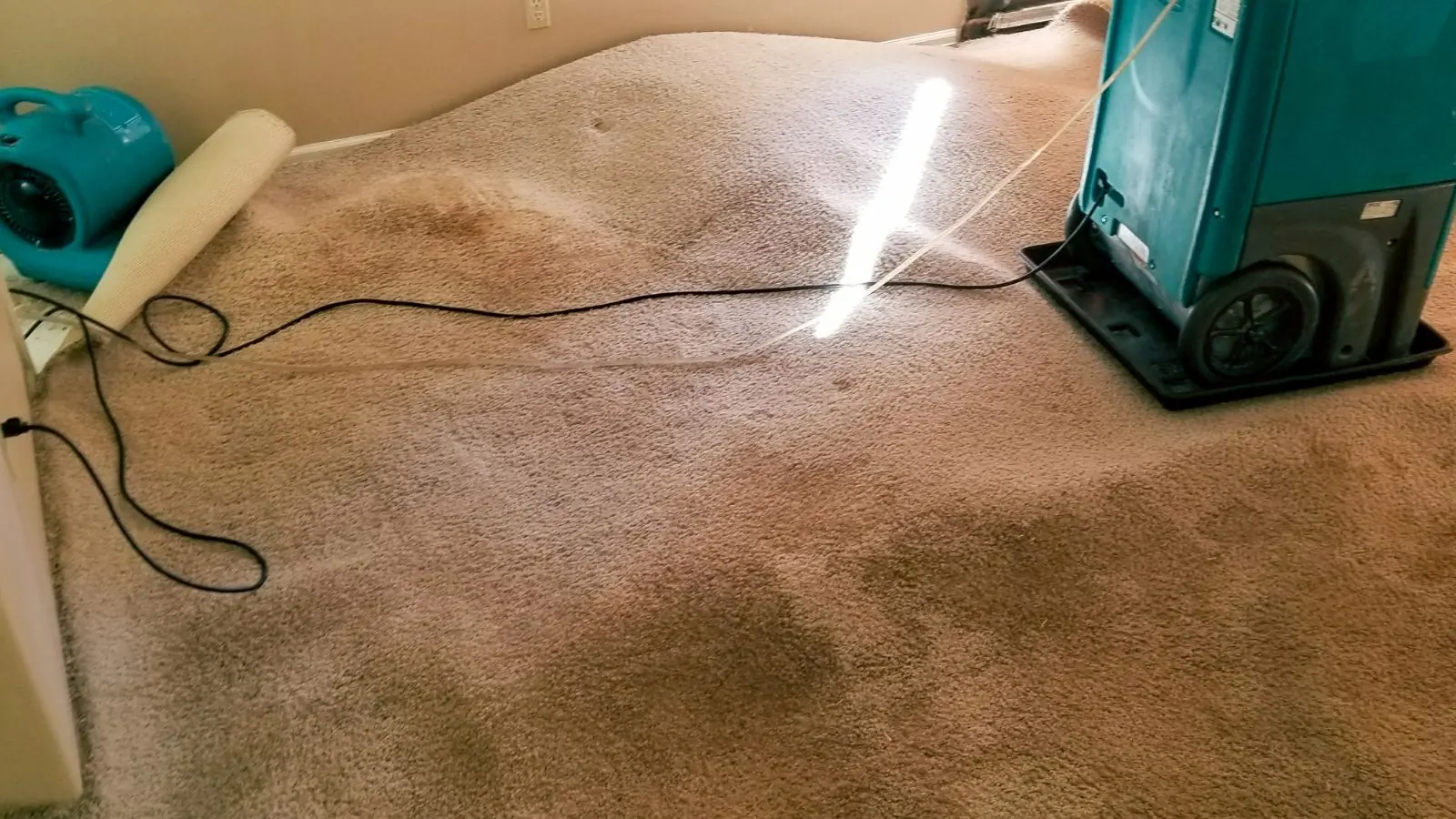
Why does my house still feel damp after I cleaned up the water?
A mopped floor and a dry-looking wall can still hold water in the subfloor, the studs and the insulation behind them. Moisture keeps moving through those materials for days, which is why a musty smell or a soft baseboard can show up well after the puddle is gone. The trade name for the fix is structural drying and dehumidification, and it is what the rest of this page explains.
Structural drying in Salisbury, NC is the controlled removal of moisture from walls, floors, ceilings and framing using air movers and dehumidifiers, guided by moisture meters. The target is a dry goal based on unaffected reference materials in the same building, not a guess or a set number of days.
How drying works: three things that must happen together
Wet materials release water as vapor when air moves across them, and a dehumidifier then removes that vapor from the air. If either part is missing, the water just migrates. Air movers without dehumidifiers push humid air into new rooms, and dehumidifiers without airflow only dry the air and not the structure.
The third piece is temperature and containment. We close off the wet zone so the equipment works on a small volume of air, and we keep the building warm enough that water evaporates efficiently.
The equipment and what each piece does
| Equipment | Role | Why it matters |
|---|---|---|
| Moisture meters | Read the moisture content of wood, drywall and concrete | Show where the water is and when a material is dry |
| Thermal imaging camera | Shows temperature differences from wet areas | Finds water behind walls without cutting them open |
| Air movers | Push air across wet surfaces | Speed evaporation from floors and walls |
| LGR dehumidifiers | Remove vapor from the air at low humidity | Keep drying going as the air gets drier |
| Injection drying systems | Push dry air into wall cavities and under floors | Dry behind baseboards and under hardwood without full tear-out |
What water mitigation means
Water mitigation is the work done to limit a water loss from growing, and it includes stopping the source, extracting water, removing materials that cannot be saved and drying the rest. Drying is the longest and most technical part of it. The industry standard ANSI/IICRC S500 sets out the principles of drying that we plan against.
Mitigation done well makes the repair smaller, because walls and floors that dry in place do not have to be replaced. You can read about the stage before drying on our water extraction page.
How we know it is dry
Map the wet areas
A baseline of moisture readings and thermal images marks every wet surface and sets the drying goal.
Set up and run equipment
Air movers and dehumidifiers are positioned for each room and each type of material.
Check readings daily
Moisture content is measured again each visit and equipment is moved or removed as areas reach the goal.
Confirm and remove
When readings match the reference materials, the equipment is picked up and a final log is kept.
Old houses in Salisbury such as those in Fulton Heights hold moisture in solid wood floors and plaster, and these materials can take longer to dry than modern drywall. A slab foundation releases water more slowly than a crawl space does, so the drying plan changes with the house.
What affects the cost of drying
Wet square footage
More area means more equipment and more monitoring visits.
Material type
Hardwood, plaster and concrete take longer than carpet and drywall.
Drying days
Equipment is billed for the time it runs, so the speed of the start matters.
Access
Drying under cabinets or inside wall cavities may call for extra steps.
We explain the scope and the price before work starts, and the daily readings give you and your insurer a clear record of progress. For the repair that follows drying, see wall and drywall repair and hardwood floor repair.
Want drying that is measured?
Call and tell us what got wet and when. We will explain how the drying goal is set for your building.
What to do before a crew arrives
- Leave the drying equipment running and plugged in until the crew says it is done
- Keep doors and windows closed in the drying area, so the air stays dry
- Keep children and pets away from cords, air movers and hoses
- Do not move equipment, since placement is part of the drying plan
- Call us if you smell something musty or the machines stop running
Structural drying questions
Usually several days, but the readings set the end date and not the calendar. Dense materials such as hardwood, plaster and concrete take longer than carpet and drywall.
Each wet room needs its own airflow and the dehumidifiers must handle all the water coming off the materials. Fewer machines would stretch out the drying time and raise the risk that materials stay wet.
If water reached the subfloor or wall cavity, yes. A surface can feel dry while the framing behind it is wet, and a moisture meter is the only way to know.
Moisture left in framing and subfloor can lead to warped flooring, peeling paint and a musty smell. That is why the final readings are checked against dry reference materials before equipment leaves.