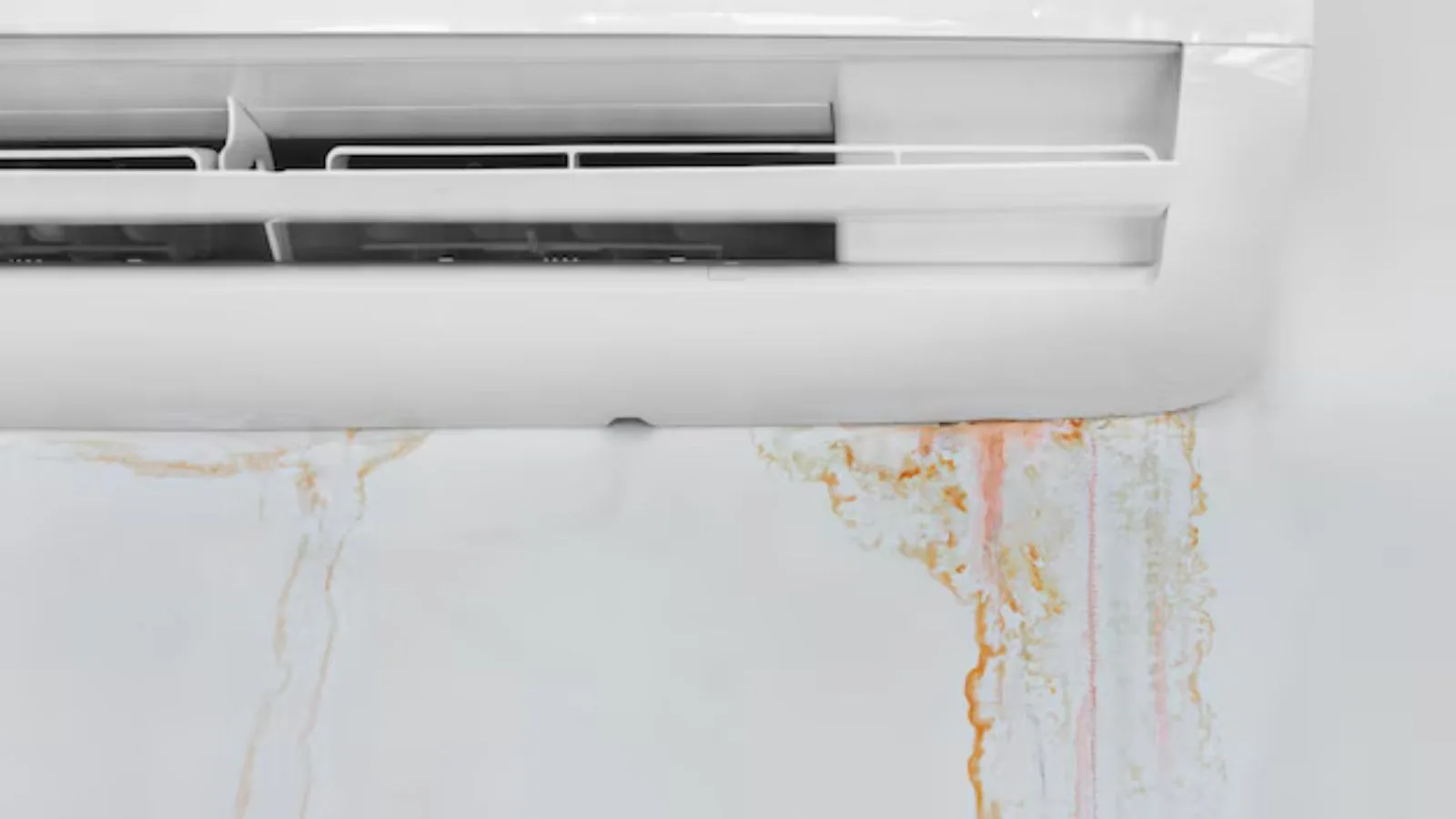
AC leak water damage repair in Salisbury, NC deals with the water that a cooling system drips, overflows or sweats into a house. An air conditioner pulls moisture out of humid air, and in the Piedmont summers that is a steady flow of water that has to go somewhere. When the condensate drain clogs or the pan fails, the water ends up in ceilings, walls and floors.
Turn the air conditioner off at the thermostat if you find water, so it stops adding more. If water has reached the air handler or any electrical parts, leave the unit off and call an HVAC technician along with us.
Where AC leak water comes from
| Source | What happens | Where the damage shows |
|---|---|---|
| Clogged condensate drain line | Water backs up and overflows the pan | Ceiling or closet below an attic air handler |
| Cracked or rusted drain pan | Pan leaks under the coil | Floor under the unit |
| Frozen evaporator coil | Ice melts and overflows the pan | Floor and cabinets around the unit |
| Condensation on ducts | Humid air meets cold duct surfaces | Ceiling stains along duct runs |
Many of these leaks begin quietly. A slow overflow from a drain line can run for weeks above a ceiling before the stain shows.
Attic units and closets: where the water ends up
When the air handler sits in the attic, the water drips onto insulation and then through the ceiling. A stain that shows only when the air conditioner runs points to the drain line, while one that grows after rain points to the roof.
Units in closets and utility rooms leak onto flooring and the bottoms of walls. Because condensate is usually clean water, drying in place is often possible when the leak is found early.
How the damage is dried and repaired
Stop the water
The system is turned off and the drain is cleared or the pan repaired by an HVAC technician.
Find the extent
A moisture meter and thermal camera check ceilings, walls and floors near the unit.
Dry the area
Wet insulation is removed and air movers and dehumidifiers dry the framing and the ceiling or floor.
Repair
Drywall, paint and flooring are repaired once the structure is dry.
The ceiling work is the same as on our ceiling repair page, and the drying plan is described under structural drying.
What affects the cost of AC leak repair
Time the leak ran
Weeks of slow leaking mean wetter insulation and framing than a single overflow.
Location of the unit
Attic leaks reach ceilings, while closet leaks reach floors.
Materials affected
Drywall, insulation and flooring each change the scope.
HVAC repair
Fixing the drain or pan is a separate cost from our work.
We explain the scope and the price before work starts. A drain line clogged over time may be treated differently by insurers than a sudden failure, so note when you first saw the stain.
To prevent repeats, many homeowners have an HVAC technician flush the condensate line and add a float switch that shuts the system off if the pan fills. That is a good question to ask your technician.
Ceiling stain under the air handler?
Call and tell us where the stain is and when the AC runs. We will explain how we would check it.
Why a fresh condensate overflow starts out as clean water
Condensate from an air conditioner is usually clean at the source, which places a fresh overflow in Category 1 under the ANSI/IICRC S500 standard for professional water damage restoration. The category can worsen as time passes, especially when water sits in insulation or a pan with debris.
That is why the first day matters. A ceiling dried quickly can often be kept, while one left wet for a week usually cannot. The plan also notes the source, since a drain line that clogged once will clog again.
What to do before a crew arrives
- Turn the air conditioner off at the thermostat and the breaker so it stops making condensate
- Keep people and pets out of rooms below a bulging or sagging ceiling
- Move furniture and rugs out from under the wet area
- Photograph the stain, the drain pan and any standing water
- Do not touch light fixtures or outlets that are wet
AC leak water damage questions
If the stain appears or grows only while the air conditioner runs, the drain line or pan is the likely source. A stain that grows after rain points to the roof.
Some homeowners flush it, but a technician can check the pan and float switch as well. If water has already reached the ceiling, call us for drying.
Condensate is usually clean water, but it can pick up dust and algae from the pan. We assess it before deciding how to dry the materials it touched.
An HVAC technician repairs the system. We handle the water damage and can coordinate with them.