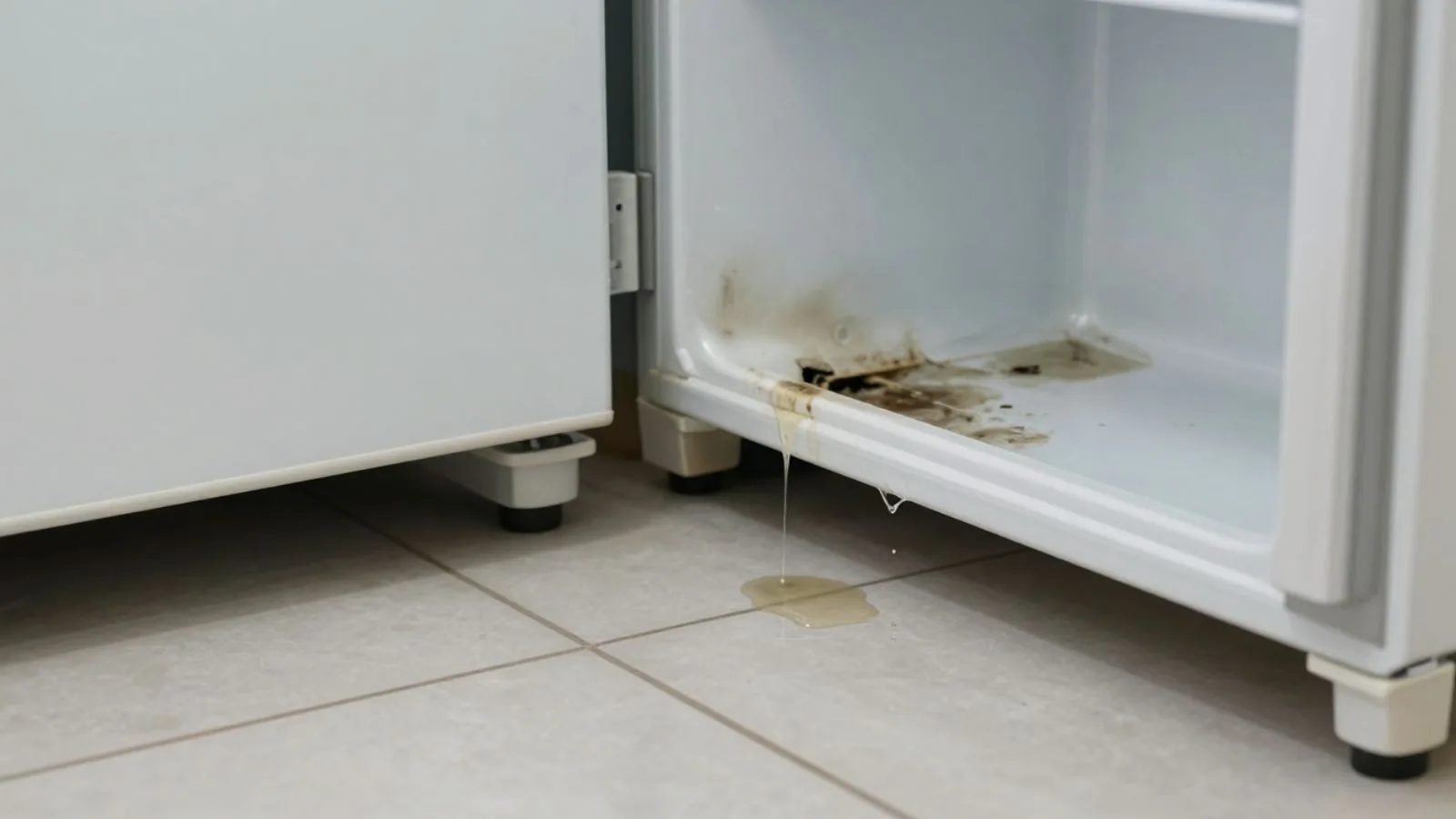
An appliance leak in a Salisbury home is an emergency when water is on the floor, and our line is open 24/7. Unplug the appliance if you can reach the cord dry, shut off its supply valve and the main if you cannot find it, and keep power off to any wet outlets. Mop up visible water, lift rugs and furniture, and photograph the leak and the damaged floor.
Appliance leak water damage cleanup covers the water that washing machines, dishwashers, refrigerators, ice makers and water softeners release when a hose, valve or seal fails, along with the damage to floors, cabinets and walls. The water is usually clean at first, which gives the best odds of drying materials in place.
Appliance leak emergency: which machines leak and how
| Appliance | Usual failure | Where the water goes |
|---|---|---|
| Washing machine | Burst or loose supply hose, drain hose, door seal | Floor, then subfloor and walls nearby |
| Dishwasher | Supply line, door gasket, pump hose | Floor and adjoining cabinet bases |
| Refrigerator | Ice-maker line or drain pan | Under the unit and along the floor |
| Water softener or filter | Fitting or tank failure | Utility room floor and walls |
A burst washing machine hose can run for hours if nobody is home, which makes the supply valve the most important thing to know about. If your valves have never been touched, test them once, because a stuck valve is no help at midnight.
The slow appliance leak nobody sees
Not every leak floods. A refrigerator ice-maker line can drip into the cabinet base or subfloor for months, and a dishwasher seal can weep behind the machine. Warping floors, peeling paint on the wall beside the appliance or a musty cabinet are clues.
Slow leaks are bigger than they look because the water reaches the subfloor and cabinet bases before it shows on the surface. We find the true extent with a moisture meter and a thermal camera.
What we do after an appliance leak
Extract the water
Wet vacuums and extraction units remove water from floors and cabinet bases.
Check what the water touched
Moisture mapping shows where the water spread under flooring and into walls.
Dry the structure
Air movers and dehumidifiers dry floors, cabinets and wall cavities, with injection drying behind baseboards.
Repair damage
Flooring, cabinet toe kicks and drywall are repaired once the readings are dry.
Where the leak sits inside a cabinet run, our kitchen water damage page covers cabinets and counters, and wet carpet next to a laundry room is covered in carpet water damage.
What affects the cost of appliance leak cleanup
Run time
A hose that burst while you were home soaks much less than one that ran all day.
Flooring affected
Tile, vinyl, laminate and hardwood respond differently to the same water.
Cabinets and walls
Water that reached cabinet bases and drywall adds removal and repair.
Hidden moisture
Slow leaks need more drying because the water reaches deeper.
We explain the scope and the price before work starts. Sudden appliance failures are often covered, while long-term seepage can be excluded, so tell your insurer when you first noticed the problem.
Not sure how far it spread?
Describe the appliance, the floor and when you found it. We will explain what we would check.
Which category an appliance leak falls into
The ANSI/IICRC S500 standard sorts water by how clean it was at the source. A washer supply hose leak is Category 1, while a washer or dishwasher drain overflow may carry soap, food or dirt and be Category 2. The category changes how carpet, pad and cabinet bases are handled.
We ask which hose or line failed and where the water went, because the answer decides whether materials can be dried in place or must come out.
What to do before a crew arrives
- Shut off the water supply valve to the appliance, then unplug it if the outlet is dry
- Do not use the appliance again until the leak is found
- Lift items and rugs off the wet floor
- Photograph the appliance, the hose and the wet area
- Do not use a household vacuum on standing water
Appliance leak questions
Yes. The line is answered 24 hours a day and we work to respond the same day when a crew is available. Shut off the supply valve and unplug the appliance if it is safe while you wait.
An appliance technician or plumber fixes the machine or the line. We handle the water cleanup and drying, and we tell you what we find so the repair can be done right.
Sudden failures are often covered, while gradual leaks may be excluded. Your policy and the cause decide, so call your carrier.
Yes. The water can stay under the appliance and in the floor for weeks, and the first signs are often cupping, soft flooring or a musty smell.