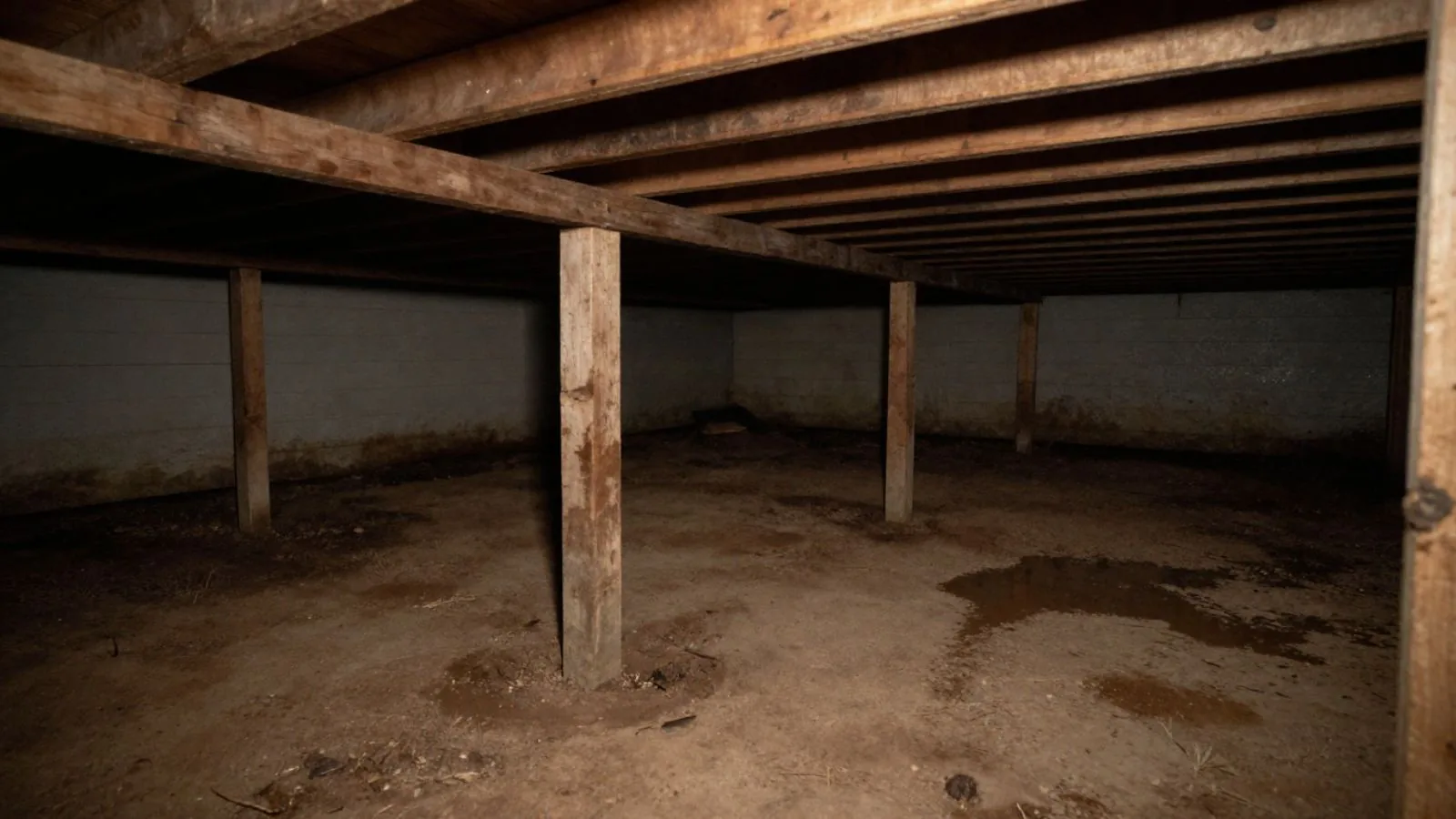
Crawl space water damage cleanup in Salisbury, NC covers standing water, wet insulation, soggy soil and moisture that has climbed into the floor joists and subfloor above. The space is dark and rarely visited, so water can sit there for weeks before a cupped floor, a musty smell or a high humidity reading upstairs gives it away.
A crawl space is also where a lot of plumbing runs. A leak on a supply line, a drain or a water heater can drip into the soil unseen, and rain that runs toward the foundation can pool in the same low spot.
Signs there is water in the crawl space
- Floors that feel cold, soft or spongy over one part of the house
- Cupping or gaps in hardwood flooring above the crawl space
- A musty smell from vents or the first-floor closets
- Sagging insulation between the joists
- Standing water or dark, wet soil when you look in with a flashlight
If you see standing water, do not go in while electrical wiring or a heat pump is wet. Call us, and call an electrician if the wiring is in the water.
Where crawl space water comes from
Four sources cover most cases. Surface water from rain runs toward the foundation and seeps in through the vents or the wall. Groundwater pushes up when the soil is saturated, and plumbing lines drip from the floor above. The fourth is condensation, where humid air meets cool surfaces and water collects on ductwork and pipes.
Tier of damage varies with the source. Plumbing water is usually clean, while surface and groundwater carry soil and organic material, and we classify it before work starts.
How we remove water and dry the space
Inspect safely
We look at the space, check for standing water, wet insulation and damaged ducts, and photograph what we find.
Pump and extract
Submersible pumps and wet vacuums remove standing water from low spots.
Remove wet insulation
Saturated batt insulation holds water against the joists and is removed so the framing can dry.
Dry and monitor
Air movers and dehumidifiers run until the joists, subfloor and soil surface read dry, and a vapor barrier is checked.
Wet framing above the space may also need the drying described on structural drying. If the water came from a pipe, burst pipe cleanup covers the cause.
Crawl space water compared with other below-floor spaces
| Space | Typical water source | Drying challenge |
|---|---|---|
| Vented crawl space | Rain, humid air, plumbing leaks | Soil keeps adding moisture |
| Encapsulated crawl space | Plumbing leaks, drainage failures | Sealed space traps water until removed |
| Slab foundation | Plumbing under the slab | Dense concrete releases moisture slowly |
If you are buying or selling a house with a crawl space, the condition of the space is worth checking, because wood framing stays wet until the water source is fixed. Restoration removes water and dries the framing, but it does not change drainage, and we will tell you if the crawl space needs a drainage or vapor barrier fix from a specialist.
What affects the cost of crawl space cleanup
Access
A tight crawl space takes more time and more careful work than an open one.
Water volume and depth
More water means more pumping time.
Insulation and framing
Wet insulation removal and joist drying add steps.
Source of water
A plumbing leak fix is a separate repair from the cleanup.
We explain the scope and the price before work starts. Insurance coverage depends on the cause, so photograph the space and keep any invoices for the repair.
Want the crawl space checked?
Describe what you see. We will explain what is likely going on under the house and what to do first.
Why crawl spaces are judged by moisture, not by smell
The ANSI/IICRC S500 standard asks restorers to measure moisture and set a drying goal. In a crawl space that means readings on joists and subfloor, not just a look at the soil. Damp air under a house can keep wood wet long after standing water is gone.
We report what we measure, and we say when the real fix is drainage or a vapor barrier rather than more drying.
Crawl space water damage questions
Look for musty odors, cupping floors, sagging insulation and standing water or wet soil. A moisture meter on the joists will tell you whether the framing is wet.
Not if wiring, ducts or equipment are in the water. If the power cannot be shut off safely, call an electrician first.
We remove and dry. A leaking pipe needs a plumber and a drainage problem needs a drainage or waterproofing contractor, and we will tell you which one the water points to.
Usually several days, longer if the soil stays damp. We check joist moisture readings before equipment leaves.