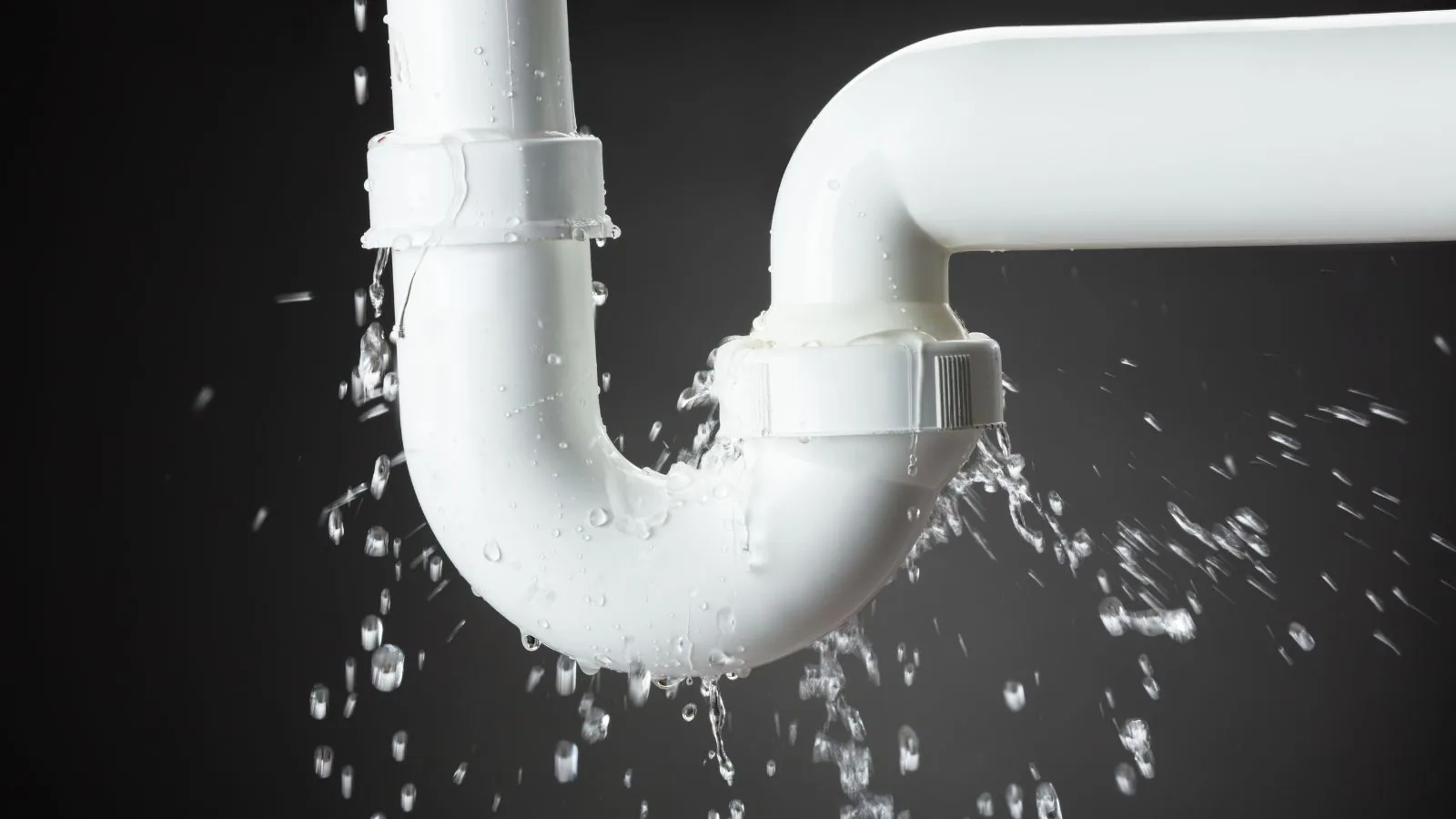
A burst pipe in a Salisbury house is an emergency and the 24/7 line is open. Shut off the main water valve first, which is usually near the meter or where the line enters the house, then turn off the water heater and keep power off in any room where water has reached outlets. Open a faucet at the lowest point to drain the line, and photograph the damage before moving anything.
Burst pipe water damage cleanup is the removal of the water a failed pressurized line released, the drying of the walls, ceiling and floors it soaked and the repair that follows. A burst supply line releases a large volume of water under pressure, which is why the first minutes decide how much the building absorbs.
Burst pipe emergency: what to do in the first ten minutes
Stop the water
Close the main shutoff, then open a low faucet to relieve pressure.
Cut power if safe
Turn off breakers for wet rooms only if you can reach the panel without standing in water.
Protect what you can
Lift furniture, rugs and electronics off the floor and place towels along doorways.
Call and document
Photograph the damage and call us and your insurer, in that order if you like.
Why pipes burst
The usual causes are corrosion in old pipes, a failed fitting or coupling, high water pressure, freezing, and ground movement in a slab. Houses from before the 1950s may still have galvanized or early copper lines that wear from the inside, and a pinhole leak can grow into a full break.
The source matters for the repair, so we tell you what we see and when the pipe itself needs a plumber. Frozen pipes have their own page, covered under frozen pipe water damage, and slab breaks under slab leak water damage.
Where burst-pipe water goes
Water from a burst line follows gravity. It runs down inside walls, collects in the bottom plate, soaks the subfloor and drips through ceilings below. A break in an upstairs bathroom can wet the ceiling, the wall cavity and the living room carpet in a single event.
The sequence is why we map moisture across the whole house and not just the visible damage. A thermal imaging camera and meter find the hidden paths, and drying plans follow them.
How a burst pipe job compares with other water losses
| Source | Speed | Typical water category |
|---|---|---|
| Burst supply line | Fast and large volume | Usually Category 1 |
| Slow pinhole leak | Gradual and hidden | Category 1, can degrade over time |
| Drain or sewage line | Varies | Category 3 |
Clean water from a supply line gives you the best chance to dry materials in place. The pumping stage is described on water extraction, and the following drying is on structural drying.
What affects the cost of burst pipe cleanup
How long the water ran
A line shut off in minutes soaks much less than one that ran overnight.
Rooms and floors affected
Water that crossed multiple levels adds tear-out and drying.
Materials soaked
Hardwood, carpet, cabinets and insulation each change the scope.
Pipe repair
The plumber fixing the line is a separate cost from our cleanup.
We explain the scope and the price before work starts. The NC Department of Insurance describes a sudden pipe burst as the kind of loss homeowners policies commonly address, so call your insurer the same day.
Pipe just burst?
Call now. We will talk through what to protect and plan the response while you wait.
Clean water, but not for long
A burst supply line is Category 1 water under the ANSI/IICRC S500 standard, which is the best case for saving materials. The clock still runs, because clean water that sits in insulation and drywall can degrade into a higher category.
We map the cavity with a moisture meter, remove only what cannot dry, and keep readings so the drying goal is measured instead of assumed.
Burst pipe water damage questions
Yes. The line is answered 24 hours a day and we work to respond the same day when a crew is available. Shut off the main valve while you wait.
A licensed plumber repairs the line. We extract water, dry the structure and repair the damage, and we coordinate timing with your plumber when we can.
Often, when the loss is sudden. The NC Department of Insurance lists a burst pipe as an example of a homeowners-covered loss, but your policy decides, so call your carrier.
As soon as the water is extracted. Most guidance treats the first 24 to 48 hours as the window for getting materials dry before they begin to deteriorate.