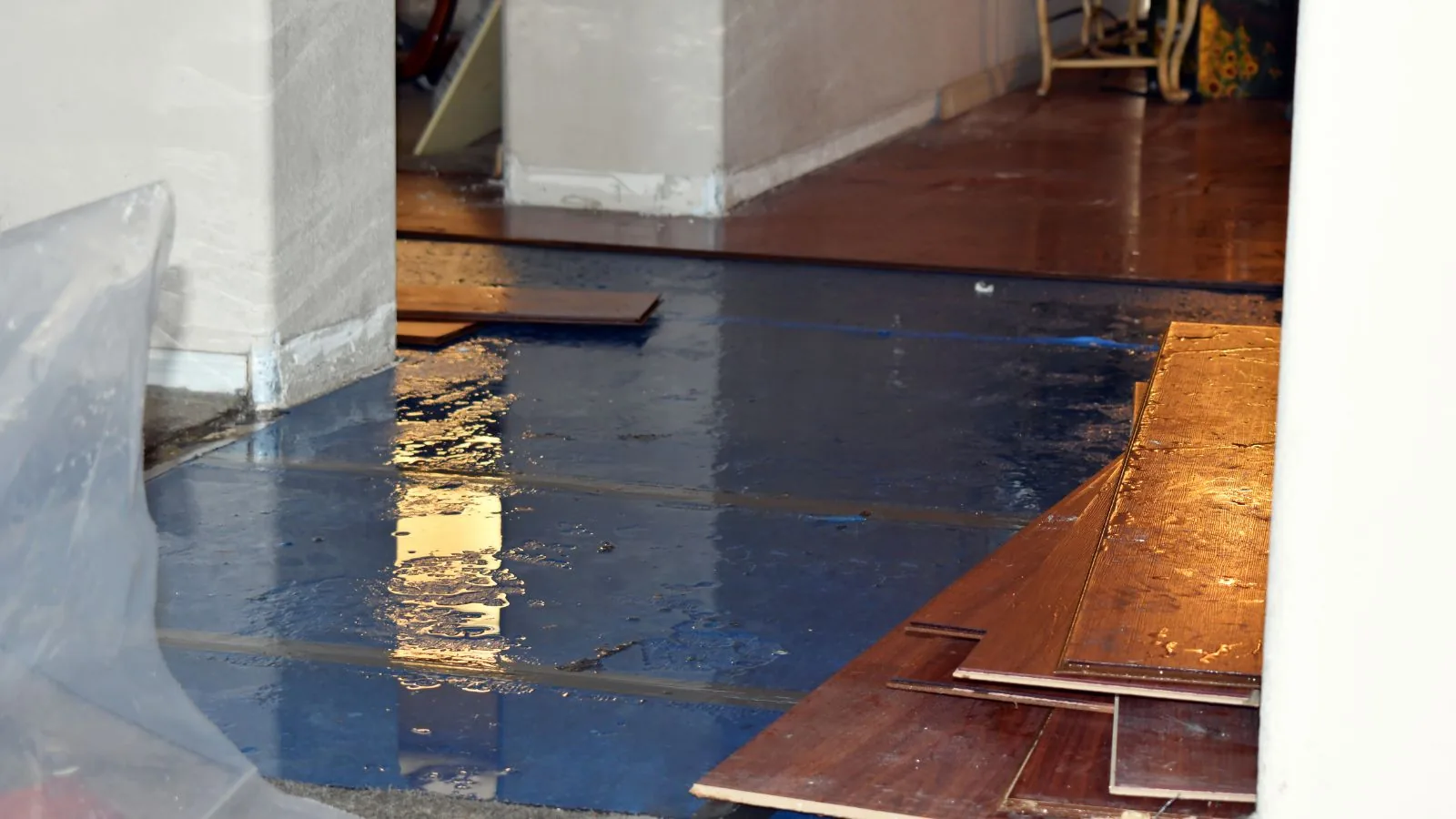
Hardwood floor water damage repair in Salisbury, NC begins with identifying what kind of floor you have, because solid hardwood, engineered wood and laminate react to water in very different ways. Solid and engineered boards swell and cup as they absorb moisture, and laminate swells at the edges and can come apart. Fast drying can reverse a lot of early damage in solid wood, but a floor that has soaked for days may not recover.
Wood floors rarely get wet only on top. Water usually enters at the seams and migrates under the boards, so the subfloor, underlayment and sometimes the joists are wet too. We check all of it with a moisture meter before deciding what to do.
Cupping, crowning and buckling: what you are seeing
| What you see | What it usually means | What happens next |
|---|---|---|
| Cupping, edges higher than centers | Moisture is coming from below or has been absorbed unevenly | Dry the floor slowly, then sand and refinish if it flattens |
| Crowning, centers higher than edges | Floor was sanded or dried unevenly after cupping | Sand once the moisture content is stable |
| Buckling, boards lifting off the subfloor | Large amounts of water or long exposure | Often means board removal and replacement |
| Dark staining at the seams | Water sat on the surface or beneath it | Sanding may remove light stains, deeper ones need replacement |
The key is patience. A cupped floor that is dried gradually can flatten on its own over weeks, and sanding too soon locks in the deformity.
Water scenarios that hit wood floors in Salisbury homes
The most common scenario is a slow leak that nobody sees, such as a dishwasher supply line, a refrigerator ice-maker line or a drip from a toilet seal. The floor under it cups gradually over weeks before anyone notices. The second is a burst or failed supply line that floods a room at once, and the third is a roof or window leak that wets the floor near an outside wall.
Many houses in Fulton Heights and Brooklyn-South Square have original solid wood floors from the early 1900s, which are worth saving. Thick solid boards often recover better than thin engineered planks when the water is clean and the drying is controlled.
How a wet hardwood floor is dried and repaired
Find the moisture
Meters check the boards, the subfloor and the area around the wet spot, and moisture mapping shows how far the water went.
Dry in place when possible
Injection drying mats and air movers pull moisture out through the boards, and a dehumidifier removes it from the room.
Remove boards that cannot recover
Boards that have buckled, split or been soaked too long are removed so the subfloor can dry.
Repair or refinish
Once readings are stable, damaged boards are replaced and the floor is sanded and finished to match.
Our structural drying page covers the equipment, and if the water got into the walls too, wall and drywall repair covers what follows. When the source is a plumbing line, burst pipe cleanup explains how that is handled.
What affects the cost of hardwood repair
Floor type
Solid hardwood, engineered wood and laminate have different drying odds and replacement costs.
Area affected
Boards run continuously across rooms, so a repair can extend past the wet area to match the finish.
Water category
Contaminated water usually rules out saving the boards.
Finish work
Sanding and refinishing a whole room adds cost but gives the best match.
We explain the scope and the price before work starts. If the loss was sudden, your insurer may cover the floor, so photograph the damage before drying starts.
Floor starting to cup?
Call and tell us the floor type and how long it has been wet. Early action gives the floor the best chance.
How the standard shapes the drying of wood floors
The ANSI/IICRC S500 standard calls for drying to a measured goal, and wood floors are a clear case. Boards that cup or crown are telling you they took on water, and the subfloor beneath them may still be wet when the surface feels dry.
We take readings on the boards and the subfloor, dry slowly to avoid cracking, and say honestly what can be saved.
Hardwood floor water damage questions
Often yes, if the water was clean and drying starts quickly. Boards frequently flatten as they dry, and refinishing comes last, after moisture readings have been stable.
No. Sanding a floor that is still wet or cupped locks in the shape and can leave you with a floor that crowns when it dries. Wait until the moisture content has stabilized.
Usually not for large losses. Laminate swells at the edges and the core board does not recover, so the affected boards are generally replaced after the subfloor is dried.
Often a week or more, depending on the species, thickness and how much water reached the subfloor. We check readings daily and do not remove equipment until the floor matches reference readings.