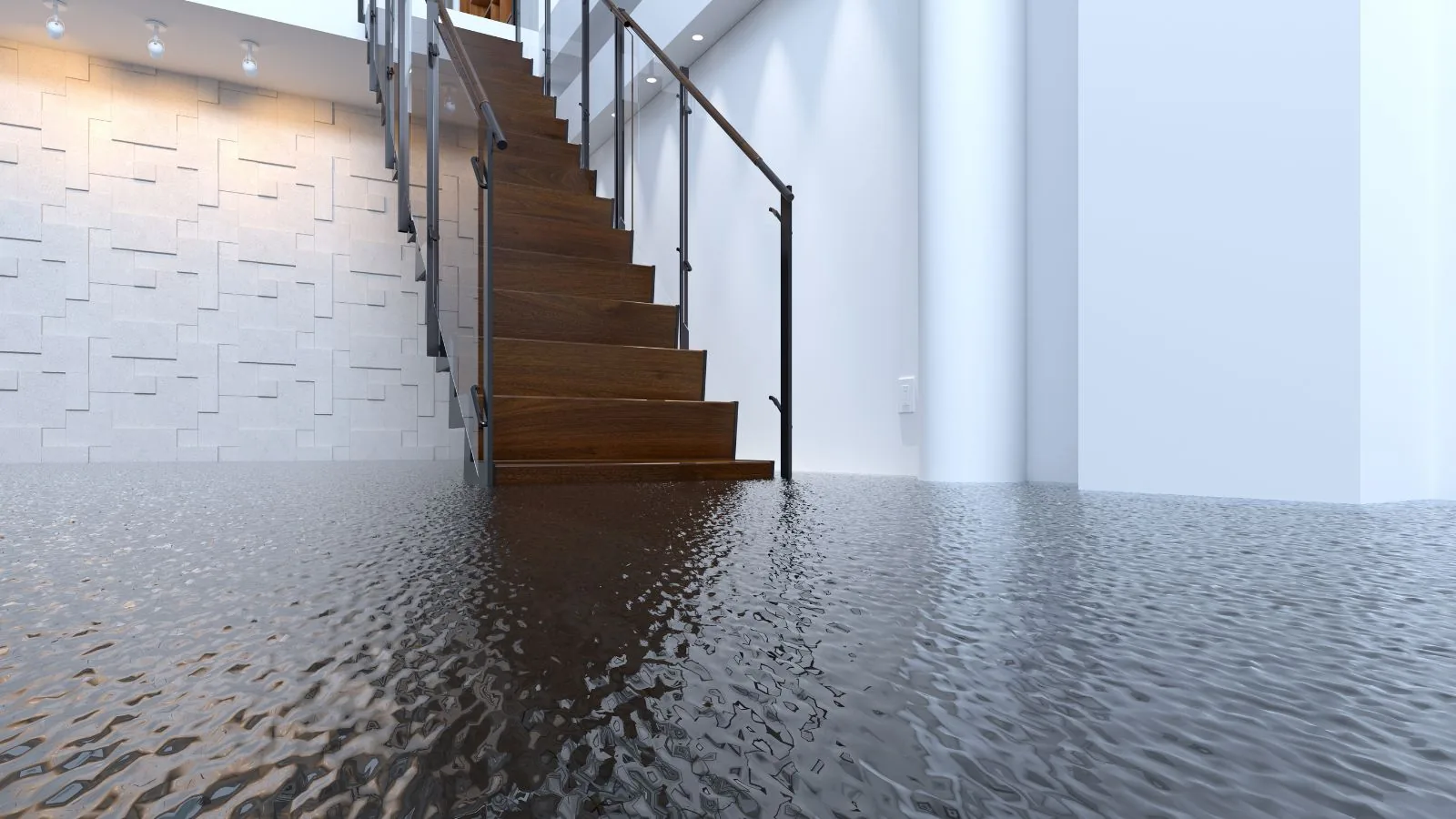
Water in a basement is an emergency, and our line is open 24/7 for Salisbury callers. Do not go down the stairs if water is above the bottom step or near an outlet, panel or the water heater, because power and standing water are a bad mix. Turn off power at the panel only if it is dry and reachable, stop any known source and call the utility or 911 for electrical or gas concerns.
Basement water damage cleanup is the removal of water below grade, tear-out of wet finishes and drying of the walls, floor and framing. Salisbury has basements, and the August 2020 flash flood put about two feet of water in at least one Country Club Hills basement in a single afternoon.
A basement flooding emergency in Salisbury and why it happens
Four causes dominate. The first is groundwater or runoff after heavy rain that pushes water through walls or floor joints. The second is a sump pump that fails when it is needed most, and the third is a pipe or water heater failure on a lower level. The fourth is a drain backup, which brings sewage into the same room.
Which one you have decides how the job is handled. Rain seepage is Category 2 or 3 water that calls for tear-out, while a broken pipe may be clean water that can be dried in place.
What the cleanup involves
Pump and extract
Submersible pumps and extraction units remove the water, usually in the first hours.
Remove finished materials
Carpet, pad, lower drywall and stored cardboard that are saturated are removed so the structure can dry.
Clean the surfaces
Concrete, block and framing are cleaned and treated before drying.
Dry and verify
Dehumidifiers and air movers run until moisture readings in block, concrete and wood return to dry levels.
Finished basements and what is in them
Finished basements add carpet, drywall, trim and furniture to the job. Wet drywall and carpet in a flooded basement are often cut out, while solid wood furniture and hard goods can sometimes be cleaned and dried.
Stored boxes are the most common casualty because cardboard wicks water upward. If you can move anything off the floor safely, do it before the water rises, and photograph what is damaged before it goes in a trash bag.
Basement cleanup compared with waterproofing
| Job | What it does | Who does it |
|---|---|---|
| Water damage cleanup | Removes water, dries the space and repairs damage | Restoration company |
| Waterproofing | Changes drainage or sealing so water stays out next time | Waterproofing or drainage contractor |
Restoration is not waterproofing. We can dry and repair what water damaged, and we will tell you honestly when the real fix is a sump pump, regrading or a drainage contractor. For floods that come from creeks, read flood damage cleanup, and for the drying stage see structural drying.
What affects the cost of basement cleanup
Water category
Seepage, flood and sewage water each bring different safety and disposal steps.
Finished or unfinished
Carpet, drywall and trim add tear-out and rebuild work.
Depth and square footage
Larger and deeper water needs more pumping and more drying equipment.
Time in the water
Materials that sat for a day or more are less likely to be saved than those pumped out in hours.
We explain the scope and the price before work starts. A sudden pipe failure or water heater loss in the basement may be covered, but flood and rising water are generally excluded from homeowners policies, and sewer backup needs an endorsement.
Not sure how bad the basement is?
Tell us the depth, the finishes and the source, and we will go through the likely scope with you.
Water category and class in a basement
The ANSI/IICRC S500 standard also defines classes of loss by how much material is wet and how quickly it will give up water. A basement with wet concrete, framing and stored items is often a higher class than a single wet room, and it calls for more drying capacity.
Groundwater and storm runoff are treated as Category 3, so porous materials such as carpet and pad usually come out rather than dry in place.
Basement water damage questions
Yes. The line is answered 24 hours a day and we work to respond the same day when a crew is available. Stay out of deep water, cut power only if the panel is dry and reachable, and tell us whether the water is still rising.
No. We dry and repair the damage, but stopping future water takes a drainage fix such as a sump pump, gutters that discharge away from the house, or grading. We will tell you when that is what the building needs.
Not while there is standing water near outlets, the panel or appliances. If the power cannot be shut off safely, wait for the utility or an electrician before you go in.
Several days is common, and the moisture readings decide the end date. Concrete and block release water slowly, so a basement that looks dry can still be giving off moisture.