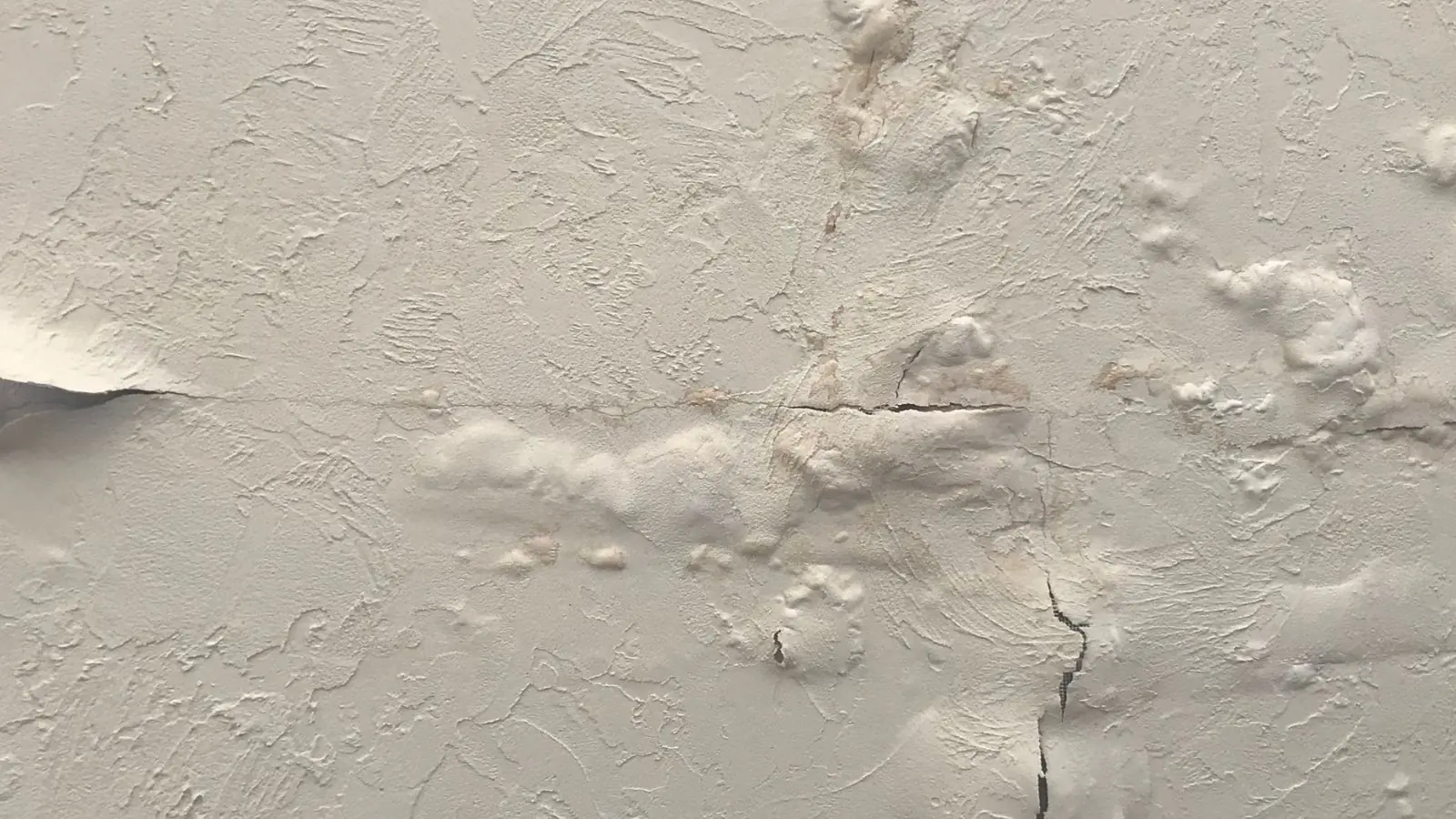
A ceiling that is dripping, bulging or showing a brown ring in Salisbury is an emergency, and our 24/7 line is open. While you wait, move furniture out of the way, place a bucket under the drip, and poke a small hole in a sagging bulge so the water drains into the bucket, since a ceiling full of water can fail without warning. Stay out from under it and keep the light switch off if water is near the fixture.
Ceiling water damage repair means finding where the water is coming from, removing the wet ceiling material and insulation, drying the joists and then rebuilding the ceiling. The stain you see is only the place the water finally reached, and the source is usually a few feet away.
Ceiling water emergency: where the water comes from
The four common sources are a roof leak, a supply or drain line in the floor above, a drip tray or drain line from an air handler in the attic, and condensation. Each leaves a different pattern, and a stain that grows only after rain points up, while one that appears after the upstairs shower points to plumbing.
Our job is to dry and repair what the water damaged. If the leak is in the roof covering or a plumbing line, a roofer or plumber has to fix that source, and we will tell you plainly when that is the case rather than patch over it.
Roof leaks that show up as ceiling damage
Roof water reaches a ceiling after crossing decking, insulation and drywall, so by the time a spot appears the roof deck and insulation above are usually wet. Wind-driven rain, missing shingles, failed flashing around a chimney or vent, and clogged gutters are the usual ways in, and rain that stops tends to leave the leak looking worse than it is.
A temporary tarp or sealed patch by a roofer stops the next storm from adding water. We then open the ceiling below, remove wet insulation and dry the framing so the repair does not trap moisture. The page on storm water damage cleanup covers wider storm losses.
How a ceiling is dried and repaired
Find the source
A moisture meter and thermal imaging camera trace how far the water has spread from the stain.
Open and remove
Wet drywall, plaster or tile and the insulation above it are cut out so the cavity can dry.
Dry the framing
Air movers and a dehumidifier run until joists and decking read dry against reference lumber.
Repair and finish
New drywall, texture and paint are matched to the room once the cavity is confirmed dry.
Stain, sag or collapse: what each stage means
| What you see | What it usually means | Usual response |
|---|---|---|
| Light brown ring | Water reached the drywall at least once | Find the source and check for wet insulation above |
| Bubbled or peeling paint | Moisture is trapped behind the paint film | Open and dry the area before repainting |
| Sagging or bulging | Drywall is holding water | Drain it safely, cut it out and dry the cavity |
| Collapse | Drywall has failed under the water weight | Clear debris and dry the space above and below |
Older Salisbury houses in Fulton Heights and Brooklyn-South Square often have plaster ceilings, and plaster handles a leak differently from modern drywall. It can hold water longer, crack and fall in sections, so we assess it before deciding whether to dry in place or replace it.
What affects the cost of ceiling repair
Size of the damaged area
A single patch costs less than a whole room of ceiling.
Ceiling material
Plaster, textured drywall and drop ceiling tile have different removal and repair steps.
Insulation and framing
Wet insulation must be removed and joists dried before the ceiling is closed.
Finish matching
Texture and paint matching adds time to make the repair disappear.
We explain the scope and the price before work starts. Water from a sudden roof or plumbing failure is the kind of loss a homeowners policy often addresses, so photograph the stain and the attic if you can and call your carrier early.
Ceiling damage you cannot explain?
Describe the stain and when it appeared, and we will help sort out where the water is likely coming from.
What the standard says about ceilings and insulation
The ANSI/IICRC S500 standard treats the category of the water, not the size of the stain, as the first question. A roof leak is usually clean when it starts, but it picks up dust and insulation fibers as it travels, which is why wet insulation is removed.
We open the ceiling only as far as the readings require, dry the framing above it, and repair after the cavity tests dry.
Ceiling water damage questions
Yes. Dispatch is answered 24 hours a day and we work to respond the same day when a crew is available. Place a bucket under any drip, keep out from under a sagging ceiling, and tell us when the stain first appeared.
If a ceiling is bulging with water, a small hole in the lowest point lets it drain into a bucket in a controlled way and can prevent a collapse. Stand to the side while you do it, and call us for the cleanup.
Our work is drying the building and repairing the ceiling, walls and floors. A leaking roof covering needs a roofer, and we can tell you whether the pattern points up to the roof before you call one.
Drying the cavity usually takes several days and the repair follows once readings are dry. The finish work, which includes drywall, texture and paint, adds a few more days depending on how large the damaged area is.