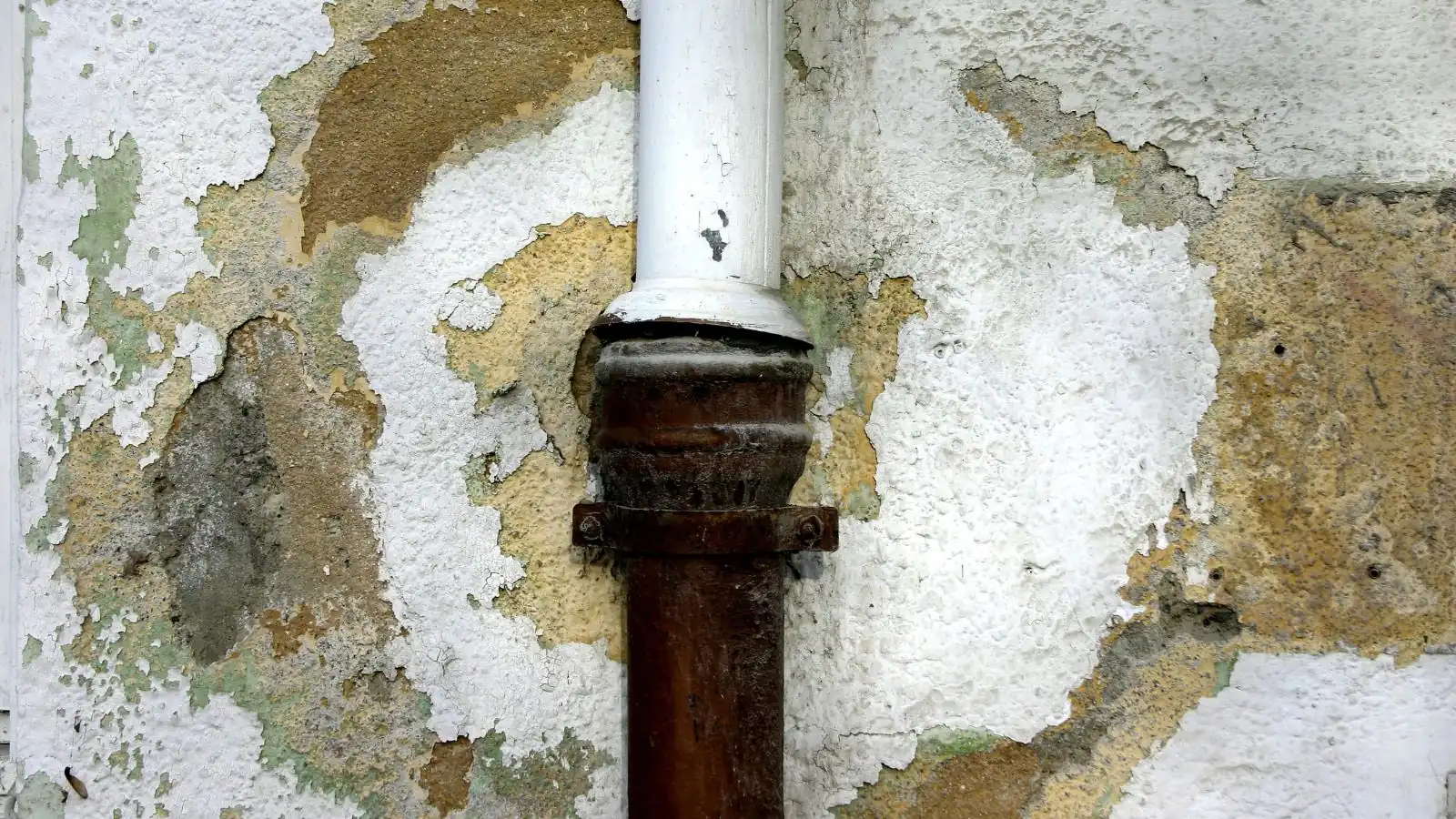
Wall and drywall water damage repair in Salisbury, NC means finding the wet section of a wall, drying the framing and insulation behind it, and replacing drywall, baseboards and paint that cannot be saved. Drywall is paper-faced gypsum and it weakens fast when wet, so a soft spot or bubbling paint is a sign the water has been there a while.
A stain on the surface is only part of the picture. Water travels down inside a wall cavity and across the bottom plate, so the damage usually reaches further than the paint shows.
Signs the water is inside the wall
- Paint that bubbles, blisters or peels in a patch
- A baseboard that swells, lifts from the wall or has a dark line along the top
- A soft or crumbly spot when you press the drywall gently
- Brown or yellow stains that return after you repaint
- A musty smell near the wall with no visible leak
Any of these points to moisture inside the wall, and a meter or thermal camera will show the extent without cutting everything open.
Wall water damage scenarios we see around Salisbury
The most common cause is a slow plumbing leak, such as a supply line to a sink, a toilet connection or a shower valve behind the wall. The second is water that wicks up from a wet floor, often after a washing machine or dishwasher overflow, and the third is exterior water through a window, a door or a failed flashing.
Older plaster-and-lath walls in neighborhoods like North Long Street-Park Avenue behave differently from drywall. Plaster can hold water longer and crack as it dries, so we assess it before deciding to dry in place or replace sections.
How walls are dried and repaired
Map the moisture
A meter and a thermal imaging camera show how far up and across the wall the water has gone.
Open the wall
Baseboards come off and small holes or flood cuts a few inches above the wet line let air reach the cavity.
Remove wet insulation and drywall
Wet batt insulation and soft drywall are removed, and framing is dried.
Rebuild
New drywall, tape, texture and paint go in once the studs read dry.
Flood cut or dry in place
| Option | When it fits | Trade-off |
|---|---|---|
| Flood cut | Water reached insulation, or the wall was wet from contaminated water | More removal now, a clean and dry cavity after |
| Dry in place | Clean water, caught quickly, no insulation soaked | Less tear-out, but depends on drying fast and verifying |
The industry standard ANSI/IICRC S500 guides the drying plan for both. The equipment is the same as on our structural drying page, and ceiling damage above the wall is covered in ceiling repair.
What affects the cost of wall repair
Wall length and height
Larger sections need more removal and more finish work.
Insulation and wall type
Insulated exterior walls and plaster walls add steps.
Finish matching
Texture, trim and paint matching can take longer than the repair itself.
Source repair
A plumber must fix a leaking line first or the wall will get wet again.
We explain the scope and the price before work starts. Insurance often treats a sudden pipe leak differently from a slow seep, so take photos of the damage and the date you noticed it.
Want to know how far it goes?
Call and describe the stain or soft spot. We will explain how we would check and what the likely repair involves.
What to do before a crew arrives
- Turn off the water source and the power to outlets on the wet wall if the panel is dry
- Move furniture away from the wet wall
- Do not press on bulging drywall, since it can collapse
- Photograph the wall and mark the edge of the stain with pencil
- Do not paint or caulk over a wet wall
Wall and drywall water damage questions
Not until the wall is dry and the source is fixed. Paint over a wet wall peels, and a stain that returns means water is still reaching it.
No. Clean water caught quickly may dry in place, but drywall that is soft, swollen or has been wet for days is normally replaced.
A moisture meter reads the wall surface and a thermal imaging camera shows cooler wet areas. Small test holes confirm what the instruments suggest.
Wet batt insulation holds water and is generally removed so the cavity can dry. Dry sections can stay in place.