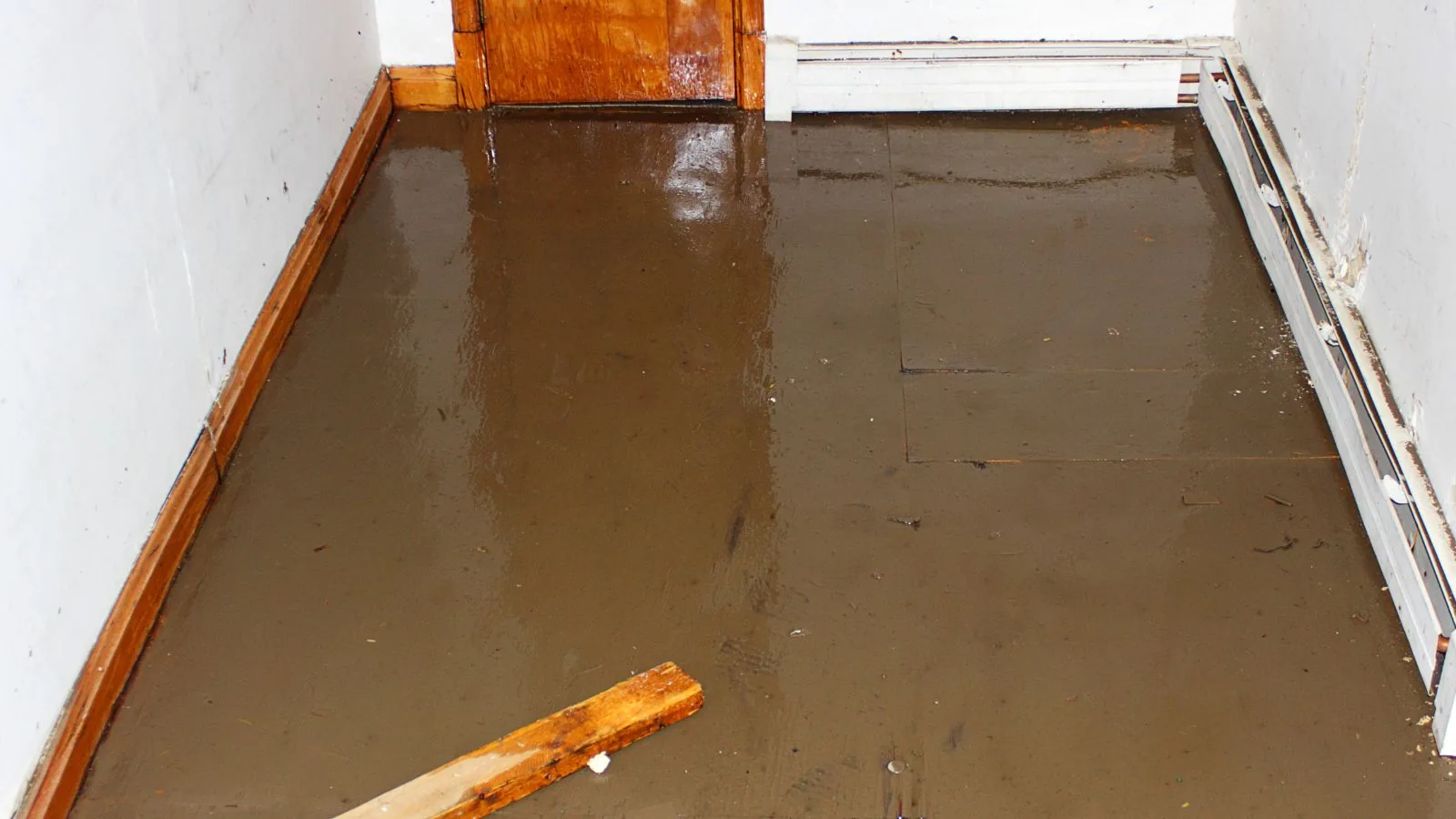
Carpet water damage restoration in Salisbury, NC starts with a question that decides everything: where did the water come from, and how long has it been there? Clean water from a supply line that is extracted within a day often leaves carpet that can be dried in place. Water that is contaminated, or that sat for several days, usually means the carpet and pad come out.
Carpet is only the top layer of a three-part system. Beneath it sit the pad and the subfloor, and a wet pad holds water long after the carpet looks dry. We treat the whole system, because drying the surface alone leaves moisture trapped below.
Can my wet carpet be saved?
Three things decide it. The first is the water category, because carpet that touched contaminated water is generally not worth keeping. The second is time, since the longer wet carpet sits, the more likely it is to stain, delaminate or hold odor.
The third is the carpet itself. Synthetic carpet on a good pad often survives a clean-water loss, while carpet that has been wet for several days, or has a jute backing, may not. We tell you honestly which situation you have before anything is removed.
Common carpet scenarios in Salisbury homes
The scenario we see most often is an appliance leak. A washing machine hose that lets go in a hallway closet or a dishwasher that overflows into an adjoining room soaks the carpet around it. The second is a roof or ceiling leak that drips onto the floor below, and the third is a water heater tank that fails in a utility area with carpet next to it.
Each one leaves a pattern. The first and third are usually clean water and good candidates for drying in place, while carpet beside a creek-flooded basement is a different problem, covered on the basement cleanup page.
What happens to the carpet and pad
Extract the water
Extraction units pull water out of the carpet and pad, and this step often removes most of what is there.
Lift and inspect
The carpet is pulled back from the tack strip so the pad and subfloor can be checked for moisture.
Remove the pad if needed
Pad soaks up water like a sponge and is often replaced because it is inexpensive compared with drying it.
Dry carpet and subfloor
Air movers and dehumidifiers dry the carpet and the subfloor underneath it, and a moisture meter confirms the result.
Save the carpet or replace it
| Situation | Usual outcome | Why |
|---|---|---|
| Clean water, caught within a day | Dry in place, often replace pad | Carpet fibers tolerate clean water if extraction is quick |
| Clean water, wet for several days | Replace carpet and pad | Odor and staining are likely |
| Flood or contaminated water | Replace carpet and pad | Porous materials cannot be reliably cleaned |
| Wool or natural fiber carpet | Case by case | Fibers can bleed and shrink when wet |
Water often travels under the baseboard into walls, so carpet losses are often paired with drywall repair along the wall. The drying stage itself is the same process described on our structural drying page.
What affects the cost of carpet restoration
Carpet and pad type
Replacement cost depends on what is on the floor and how much of it is wet.
Square footage
Larger wet areas need more extraction and more drying equipment.
Water category
Contaminated water means replacement, while clean water may allow drying in place.
Subfloor condition
A wet subfloor adds drying days, and damaged subfloor adds repair.
We explain the scope and the price before work starts. Keep photos of the wet carpet and a sample of the pad if your insurer asks for evidence of the loss.
Not sure whether to replace it?
Tell us what happened and how long it has been wet. We will tell you what we think is worth drying.
How the standard treats carpet and pad
Under the ANSI/IICRC S500 standard, carpet wet by Category 1 water can often be dried in place when the pad and subfloor are handled quickly. Carpet that was wet by Category 3 water is generally removed, because it cannot be reliably cleaned.
The pad is the deciding layer. It holds water long after the carpet feels dry, so we check it and say plainly whether it stays or goes.
What to do before a crew arrives
- Remove furniture and lift loose items off the wet carpet
- Open windows if the air outside is dry, and run fans
- Do not walk on soaked carpet more than needed, since it spreads water
- Photograph the wet area before anything is moved
- Do not use a household vacuum on wet carpet
Carpet water damage questions
Clean-water carpet extracted within a day or so often recovers. After several days wet, odor, staining and delamination become likely, and the pad underneath is rarely worth keeping.
Often, yes. Pad absorbs water and dries slowly, and replacing it is usually cheaper than the extra drying time. We check it with a moisture meter and tell you.
A small clean-water spill can sometimes be handled that way. If the water reached the pad or subfloor, a rented machine leaves moisture below the surface that only drying equipment can reach.
If it is dried fast and the pad is checked, the smell should not develop. A lingering musty smell after a leak means something is still wet, and a moisture reading will find it.