Why early signs matter
Water rarely announces itself. A slow leak can run inside a wall for weeks, and the first sign may be a small change in a ceiling or a floor. Catching it early keeps the repair small and the drying simple.
Walk the house once a season with this list in mind. It takes ten minutes and it is the cheapest inspection a homeowner can do.
Visible signs
| What you notice | What it can mean | First step |
|---|---|---|
| Brown or yellow stain on a ceiling | Roof or upstairs plumbing leak | Mark the edge of the stain and watch it |
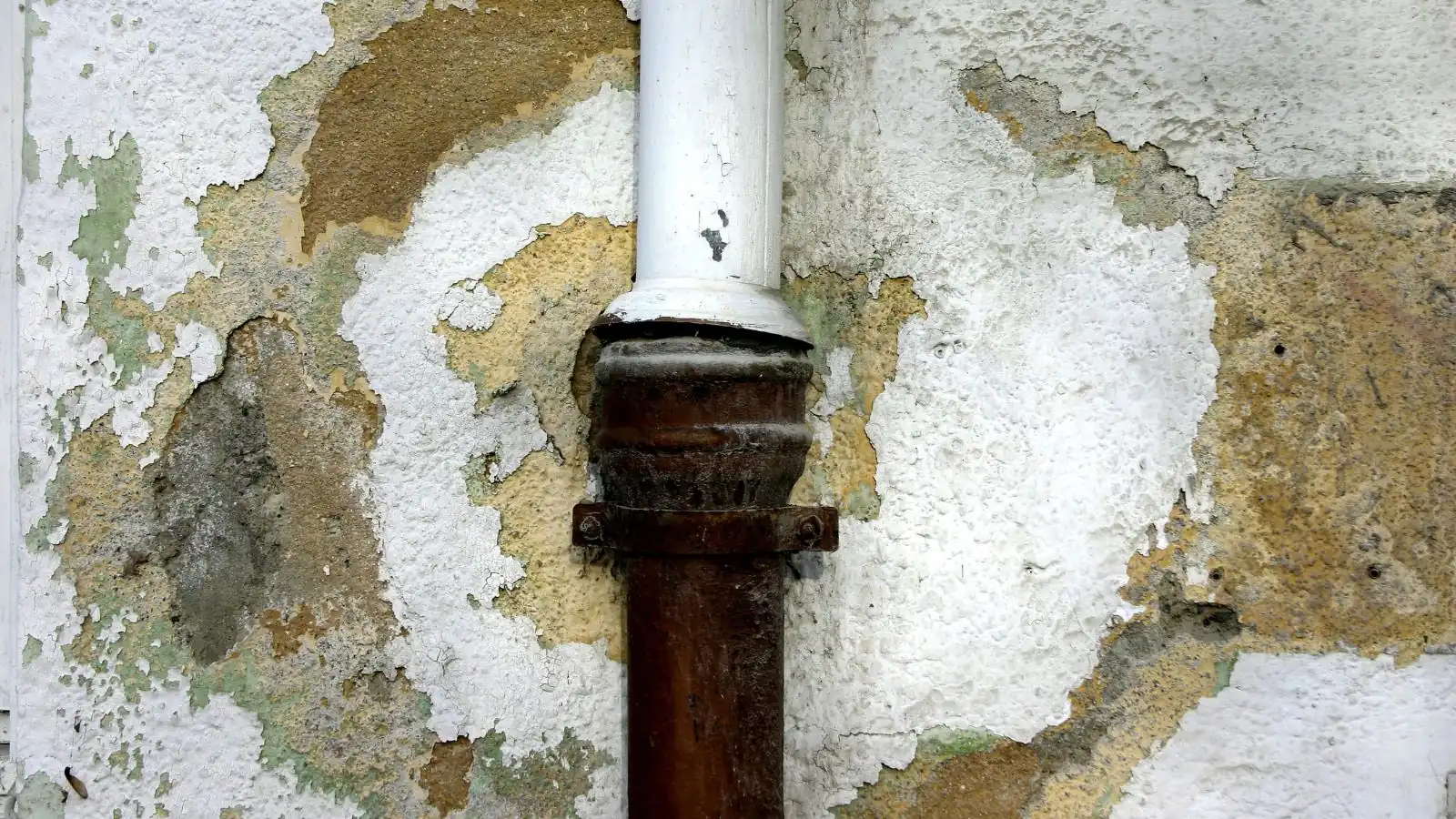
| Peeling or bubbling paint | Moisture behind the wall | Check for dampness and a musty smell |
| Warped or cupped flooring | Water below the floor | Check crawl space or subfloor |
| Sagging drywall | Saturated board | Keep people out and call for help |
| White chalky deposits on masonry | Moisture moving through the wall | Look for the water source outside |
| Rust around a fixture or baseboard | Repeated wetting | Test with a moisture meter |
Signs you can smell, hear or feel
A musty or earthy smell in a room that has no visible problem is one of the most reliable hints. Dripping inside walls, a toilet that runs by itself and a floor that feels spongy underfoot all point to water where it should not be.
Walls that feel cool or damp to the touch and windows that fog on the inside deserve a closer look. Use the back of your hand, which is more sensitive than your fingertips.
Check the water bill and the meter
A bill that climbs without a change in habits can mean a hidden leak. Turn off every fixture, then watch the meter. If it still moves, water is going somewhere. Slab leaks and underground line leaks can run for a long time without a stain.
Seen one of these signs?
A short description is enough. We will tell you what to check and what to protect while a crew gets ready.
Check the places people forget
- Under sinks and behind the toilet
- Around the water heater and the washing machine hoses
- The attic near the chimney and plumbing vents
- The crawl space, if you have one
- Window sills and the walls below them
Appliance connections are common sources. The page on appliance leak water damage explains what we look for around washers, dishwashers and ice makers. Ceiling stains are a different job, covered under ceiling water damage repair.
A simple seasonal walk-through
Pick the same weekend each season and follow the same route. Start in the attic or top floor and finish in the basement or crawl space, since water travels down. Look at ceilings, corners and the base of each wall.
Press the floor with your foot near tubs, toilets and appliances. Soft spots or a slight give often show up before any stain does. Write down anything unusual with the date, so you can compare next season.
After a heavy rain, check the places where the house meets the ground, including window wells, door thresholds and the foundation line. Fresh dampness in those places points to a drainage problem rather than a plumbing one.
If a sign turns out to be old and dry, that is good news, but write it down anyway. A stain that does not change over two or three seasons is likely a closed chapter, while one that grows after rain is still active.
Why older Salisbury homes need a closer look
According to the National Register of Historic Places listing, the Fulton Heights Historic District alone has 439 contributing buildings built between 1903 and 1948. Homes of that age often combine plaster walls, wood floors and decades-old supply lines, and moisture can hide in those materials before a stain appears.
The Brooklyn-South Square and North Long Street-Park Avenue districts hold more houses from the late nineteenth and early twentieth centuries. If you own a home in any of these areas, a seasonal walk-through matters even more.
Sources: National Register of Historic Places district listings for Salisbury, NC.
What to do when you find something
Photograph it, mark the edges of any stain with a pencil and note the date. If water is active, shut it off at the fixture or the main. Then call a plumber for the repair and a restoration crew for the drying. Neighbors in East Spencer and Landis can call the same line.
Questions about spotting water damage
Often, yes. Plaster ceilings and thick wood floors absorb water before a stain shows, and a leak can travel along framing before it surfaces. If you own an older home, check ceilings and baseboards for slight changes in color or texture.
Fresh damage is usually damp and the stain edge is soft. Old damage is dry and may have crisp rings from repeated wetting. A moisture meter gives a clearer answer than the eye.
Not always, but it is a good reason to look. Check the usual hiding places, and if you find dampness, treat the source first.
Soon. Wet materials begin to break down within a day or two, so stop the source and begin drying as quickly as you can.