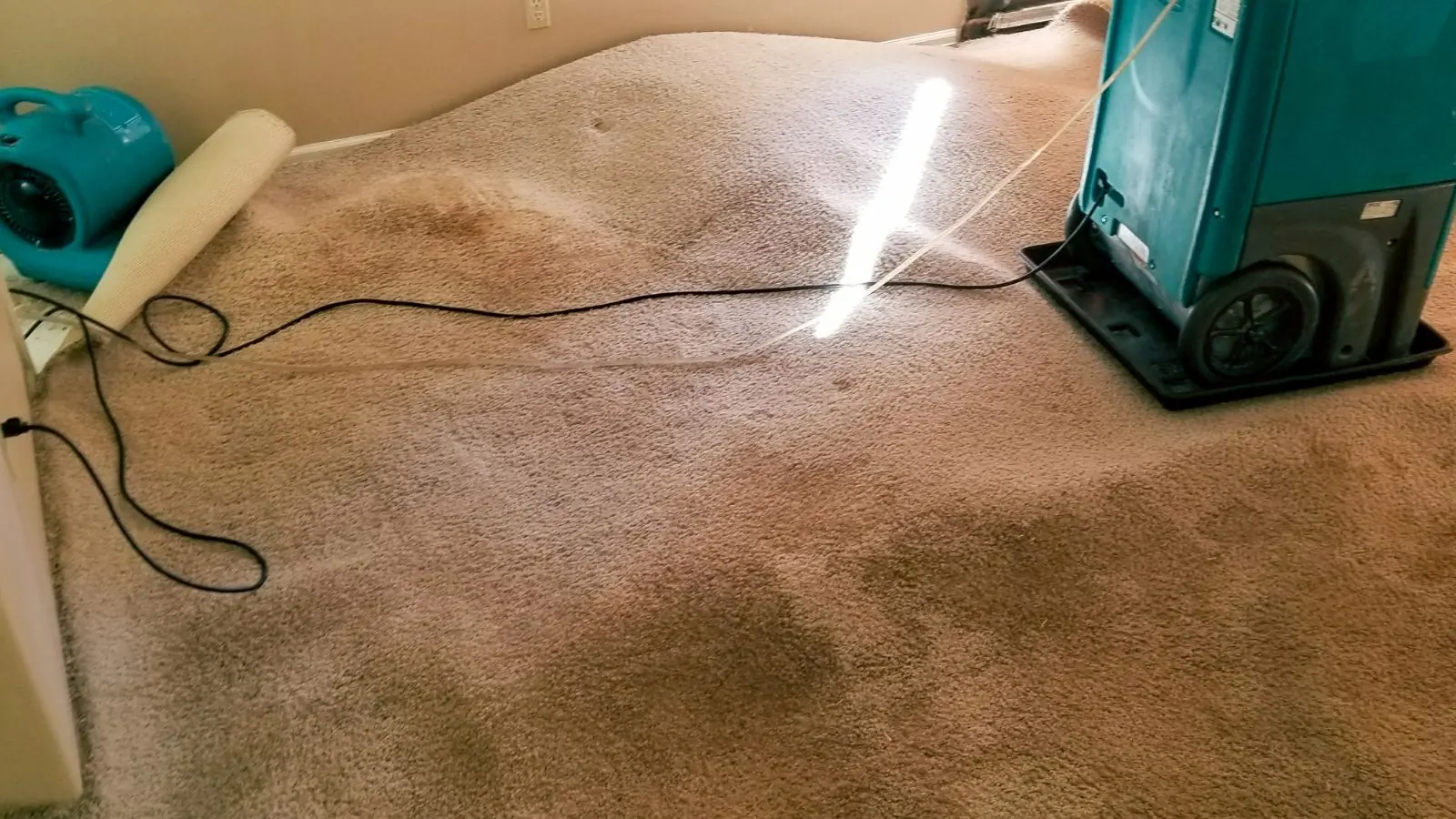
What the smell is telling you
A musty smell comes from damp materials, and the smell lasts as long as the moisture does. Sprays and fresheners cover it for a day, but they do not dry anything, and the odor comes back.
The fix is a short list. Find where the moisture is, dry it, remove what cannot be dried, then clean and ventilate.
Step by step
Find the strongest spot
Walk the rooms and note where the smell is strongest. Check closets, cabinets, carpet edges and the base of walls.
Check for dampness
Press carpet and pad, touch baseboards, and look for stains, bubbles or warping.
Stop the source
Fix the leak, clear the drain, or seal the opening where water enters.
Dry the area
Run fans and a dehumidifier, and open windows when outdoor air is dry.
Remove what will not dry
Wet insulation, carpet pad and soft drywall often have to come out.
Clean and recheck
Clean hard surfaces and test the area again after a few days.
Where odors hide
| Place | Why it holds moisture | What helps |
|---|---|---|
| Carpet pad | It absorbs and dries slowly | Remove and replace the wet pad |
| Wall cavities | Insulation and framing stay damp | Open the wall and dry it |
| Crawl space | Poor airflow and damp soil | Fix drainage and dry the space |
| Under cabinets | Slow leaks at traps and lines | Repair, dry and clean |
| Closets on exterior walls | Little air movement | Open, dry and ventilate |
If the smell is under the house, the page on crawl space water damage explains what we check. For smells in a carpeted room, carpet water damage restoration shows when the pad needs to come out.
Cannot find the source?
We use moisture meters and thermal imaging to find where the water went, then explain the plan before work starts.
What not to do
- Do not spray air fresheners as the only fix
- Do not paint over a damp wall
- Do not mix cleaning chemicals, especially bleach and ammonia
- Do not keep a closed room with a wet floor shut up
If you see dark patches or the smell is strong, wear a mask while you work and keep children and anyone with breathing problems out of the area. Persistent symptoms deserve a conversation with a doctor.
Drying the air and the structure
A dehumidifier lowers the moisture in the air, and fans move that air across wet surfaces so they release water. Both are needed, and neither is enough alone. Close windows while the dehumidifier runs, and empty its tank often.
Aim to bring the room back to a normal humidity level. A simple hygrometer, which costs very little, shows whether the room is drying. Levels that stay high point to a hidden wet area.
Cleaning once the structure is dry
Hard surfaces can be washed with a mild detergent and water, then dried. Fabrics that smell may need laundering, and upholstered items that stay musty often cannot be saved. Wear gloves and a mask when you clean damp areas.
Avoid ozone and fogging products as a first step. They mask odors without drying anything, and the smell returns when the moisture does. Drying and removing wet material is what actually ends the problem.
Professional drying follows the ANSI/IICRC S500 standard, which asks restorers to set a drying goal and measure against it. That is the reason a crew takes moisture readings instead of trusting the feel of a wall. A smell is a hint, and a reading is the proof.
Why speed matters, according to federal guidance
The US Environmental Protection Agency advises that water-damaged areas and items be dried within 24 to 48 hours to prevent mold growth, and it notes that controlling moisture is the key to controlling mold. That timing is why a smell that lingers for days deserves attention.
Salisbury knows how fast water can arrive. In August 2020 a flash flood put about two feet of water in a Country Club Hills basement, and basements that sit wet for days are where musty odors start.
Sources: US EPA guidance on mold and moisture, local news reporting on the August 2020 flash flood.
When the smell does not go away
If the odor remains after the area is dry, look for a second source. Hidden leaks, a failed drain line or a damp crawl space can keep a smell alive. A second wet spot nobody noticed is a common reason a smell lingers, and our crews in Landis and East Spencer can check for one.
Questions about musty smells
Low areas collect water in heavy storms, and a basement that stays damp for days can hold a smell until it is dried and cleaned. Running a dehumidifier and clearing wet materials quickly makes the difference.
It helps by lowering humidity, but it will not fix wet materials. Remove what is soaked, dry the structure and then clean.
It is a sign of damp conditions that can support mold. People with asthma or allergies may react. Fix the moisture, and see a doctor if symptoms persist.
Once everything is dry and cleaned, the odor usually fades within days. If it lingers, there is probably still a damp spot to find.