Why a buyer should look closely
Water damage can be a cheap fix or an expensive one, and the difference depends on how long it has been going on. Buyers who check before they close have time to negotiate, to ask for repairs or to walk away.
Do your own walk-through first, then hire a licensed inspector. The inspector has the tools, and you know what you saw.
Your own walk-through
- Look at ceilings for stains, especially under bathrooms and roof edges
- Press floors near tubs, toilets and appliances for soft spots
- Check under sinks for rust, staining and fresh caulk
- Smell the closets, the basement and the crawl space
- Look at the baseboards for swelling or peeling
- Check the water heater for rust and drips
- Look for fresh paint on only one wall or ceiling
Fresh paint in a single spot is a classic sign. It may be innocent, but ask why it was painted and when.
The crawl space, attic and foundation
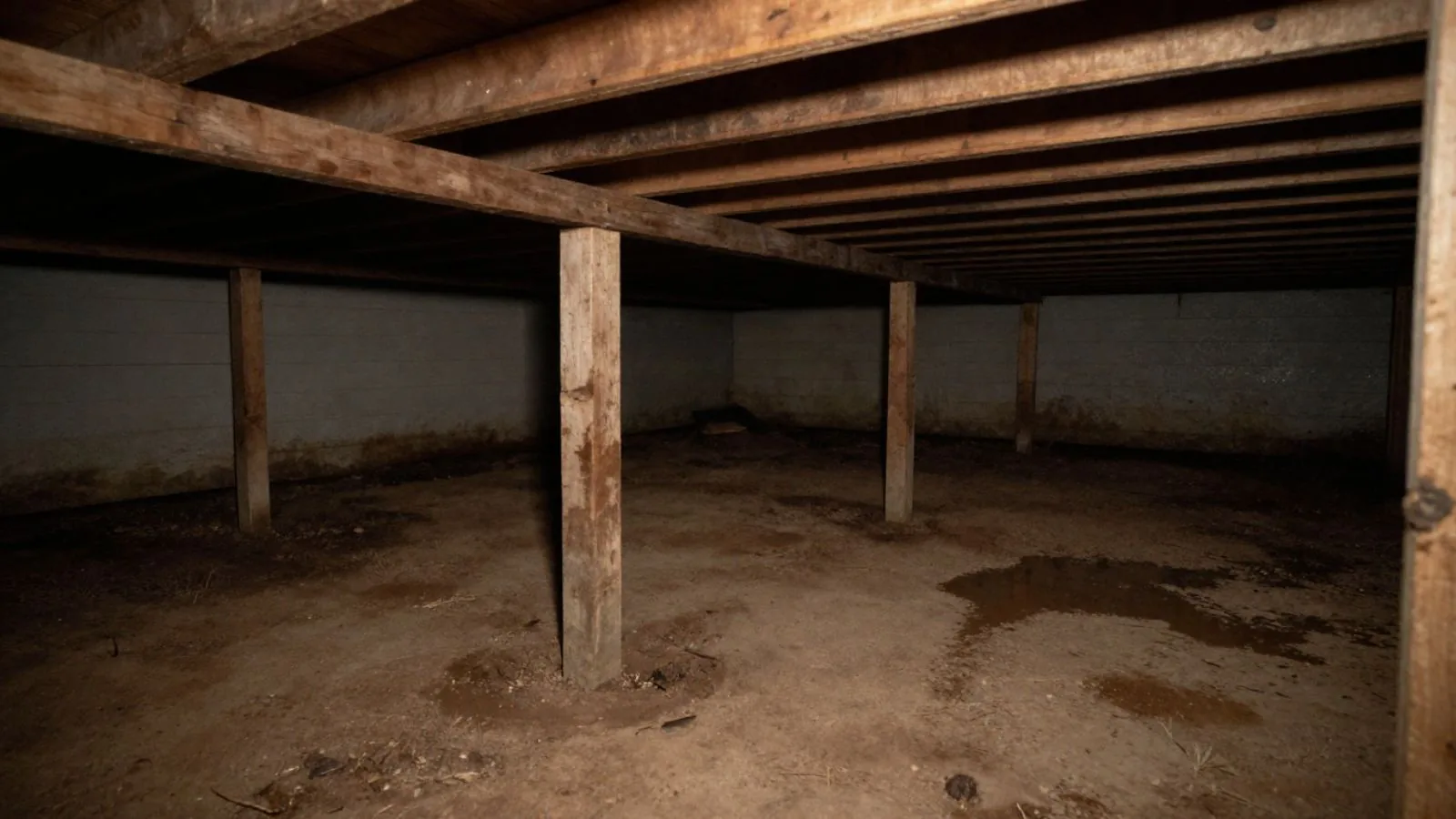
Many problems begin below or above the living space. In a crawl space, look for standing water, damp insulation, a vapor barrier that is torn or missing and mud lines on piers. In an attic, look for water stains on the roof deck and wet insulation.
Outside, check that the ground slopes away from the house, that gutters drain away from the foundation and that there are no cracks with white mineral deposits. These are signs that water has been moving through the wall.
| Question | Why ask it |
|---|---|
| Has the home ever had a leak or flood? | The disclosure form asks, and details matter |
| Were repairs done, and by whom? | Records show the work was complete |
| Is the home in a mapped floodplain? | Affects insurance and lender requirements |
| Can the inspector take moisture readings? | Meters find what eyes miss |
| How old are the roof, water heater and supply lines? | Age predicts failures |
Closing soon and found a wet area?
A moisture reading and a clear scope help you negotiate. We explain the scope and the price before work starts.
Flood risk and insurance
Before you close, search the address on the state flood risk site and ask your insurance agent about coverage. Lenders often require flood insurance for homes in mapped high risk areas, and premiums vary a great deal.
Using the inspection well
Be at the inspection if you can. Ask the inspector to show you what a stain looks like on a moisture meter, and ask what the readings mean. An inspector who explains the reading is giving you information you can use at the negotiating table.
Ask whether a separate crawl space or moisture specialist is worth hiring. If the inspector finds high readings, a second opinion can put a number on the repair before your due diligence period ends.
Questions about the plumbing
Ask what the supply lines are made of and how old they are. Ask whether the water heater has been replaced and when. Ask whether the main shutoff works, since a stuck valve is a risk. These questions take a minute and tell you a great deal about how the house has been maintained.
Make a note of the date and the weather when you visit. A walk-through after a rainy week shows problems that a dry week hides, and a second visit at a different time can reveal a smell or a damp spot you missed the first time.
Salisbury districts and floodplain facts buyers can check
Salisbury has several historic districts, including Fulton Heights with 439 contributing buildings built between 1903 and 1948, Brooklyn-South Square and North Long Street-Park Avenue. Houses of that age often have crawl spaces, plaster walls and older plumbing, so an inspection is especially worthwhile.
About nine percent of Rowan County land lies in the floodplain, and the NC Flood Risk Information System at fris.nc.gov lets you check a specific address. According to the North Carolina Real Estate Commission, moisture and mold inspections and flood zone checks are among the due diligence steps for buyers.
Sources: National Register of Historic Places district listings, NC Flood Risk Information System, NC Real Estate Commission due diligence brochure.
What to do if you find a problem
Photograph it, ask the inspector to document it and talk to your agent about options. You can request repairs, ask for a credit or cancel within your due diligence period. After you own the home, our crews in Granite Quarry and Landis can dry and repair wet areas, and the page on crawl space water damage explains what we check below the house.
Home buyer questions
It needs a careful one. Older homes often have plaster, wood floors, crawl spaces and aging plumbing, so ask the inspector to focus on moisture, the crawl space and the roof.
Your contract and due diligence period decide that. Talk to your agent or an attorney before the period ends.
Search the address on the state flood risk site at fris.nc.gov, and ask your insurance agent and lender what applies.
Not necessarily. A dry, stable stain may be old. Ask the seller, and have an inspector read it with a moisture meter.